If you’ve ever walked past a commercial kitchen at 2 a.m., stood in a rain-soaked warehouse loading dock, or watched a factory line stretch stainless steel into the tight roll of a coil, you’ve encountered a material that does a job most people don’t stop to question: stainless steel. For us, a stainless steel coil supplier, the questions we get from clients aren’t just about price or gauge—they’re about use. And one of the most consistent, and most critical, questions is about heat resistance. Clients need to know: can this coil hold up in 1,200°F ovens? Will it warp in a furnace? How does that change from grade to grade? As someone who’s spent 12 years sourcing, testing, and selling stainless steel coils, I can tell you the answer isn’t a simple yes or no. It’s a breakdown of chemistry, manufacturing, and how a coil will actually be used. Stainless Steel Coil
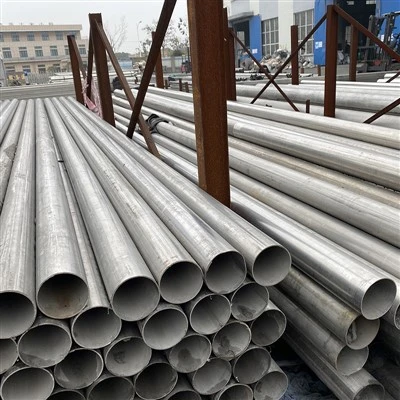
Let’s start with the basics that most people skip over, because heat resistance in stainless steel isn’t one single trait—it’s a balance. Stainless steel’s core is iron, but the “stainless” part comes from chromium: at 10.5% or higher, chromium forms a tight, invisible oxide layer on the surface that repels rust and corrosion when exposed to air or moisture. But when temperatures climb, that layer behaves differently, and other elements in the alloy step up to determine how well the metal stays strong, doesn’t crack, or doesn’t degrade. That’s why two coils that look identical—one 304, one 316, one 409—can have wildly different heat tolerance, even if they’re both labeled “stainless.”
The first test most specs reference is maximum continuous service temperature. For the most common stainless steel coil, 304, that number tops out around 1,500°F (815°C) when used consistently. But here’s the catch: that’s for static, low-stress conditions. If you’re rolling that coil into a bakeware sheet that’s pulled out every hour, or wrapping it around a heat exchanger tube that vibrates under pressure, that number drops. I once had a client in a small commercial bakery who ordered 304 coil, installed it as a liner in their industrial oven hood, and complained after six months that it had warped and corroded along the edges. When we checked the oven’s average operating temp, it was 1,600°F—just a hair over 304’s limit. The chromium oxide layer had started to break down, and the iron beneath oxidised (rusted) unevenly, while the metal’s tensile strength dropped enough to let the weight of the hood pull it out of shape. That’s the number that matters: continuous use, not peak spikes.
For clients dealing with higher heat, 316 stainless steel coil is a step up, but it’s not perfect. The 16% chromium, plus molybdenum, gives it better corrosion resistance at high temps, pushing continuous service to 1,650°F (900°C). Again, though, context applies. I sold 316 coils to a steel mill for their annealing furnaces, and they reported no issues for three years—until they started running a new alloy that required furnace temps of 1,750°F. That’s when the 316’s structure started to change; at temps above 1,700°F, chromium can react with carbon in the alloy to form chromium carbides, leaving tiny pockets of chromium-poor metal along grain boundaries. Those pockets become weak points, and over time, the coil developed cracks along its edges. That’s a failure mode most general specs don’t highlight. So, if you’re looking at 316, ask not just the max temp, but if the environment has high carbon exposure—like furnaces, exhaust systems, or even some industrial drying lines.
Now, the workhorses for high-heat applications are the ferritic and austenitic heat-resistant grades, often labeled with a “H” suffix. Let’s talk about 309H and 310H, because these are the coils we sell most to foundries, refineries, and kiln manufacturers. 309H has 23% chromium and 12% nickel, pushing continuous service to 1,800°F (980°C), with short-term peak resistance up to 2,000°F (1,095°C). We sold a roll of 309H coil last year to a custom furnace builder who was making a heat treatment chamber for aerospace parts; their daily operating temp is 1,900°F, and after 12 months, the coil still looks as smooth as the day it arrived. The 310H is even sturdier: 25% chromium, 20% nickel, for continuous use up to 2,000°F (1,095°C), short peaks to 2,200°F (1,200°C). We had a client in a cement plant that needed coil for their clinker coolers—those handle raw material that’s 2,300°F when it exits the kiln, and the 310H coils have held up for four years, even with constant thermal cycling (hot, cold, hot, cold) that would crack a lesser grade.
What a lot of clients miss is that heat resistance isn’t just about the alloy—it’s about how the coil is manufactured. A cold-rolled stainless steel coil, which is thinner and more rigid, will handle temp changes differently than a hot-rolled one, which has a thicker, rougher grain structure. Last quarter, we had a repeat client who ordered the same grade of coil twice: once cold-rolled for a pizza oven hood, once hot-rolled for a smoke stack liner. The cold-rolled one warped after eight months; the hot-rolled one is still going. Why? The hot-rolled coil’s grain structure is coarser, better at expanding and contracting without breaking, while the cold-rolled one’s tight, uniform grain has more stress points when heated repeatedly. It’s a small detail, but it’s the difference between a coil that lasts two years and one that lasts a decade.
Another common point of confusion is oxidation vs. scaling. When stainless steel is exposed to temps above 1,000°F, the chromium oxide layer can react with oxygen to form a thicker, flakier substance called scale. For low-stress parts like oven liners, a little scale is just a cosmetic issue—easy to wipe off. But for parts that hold pressure, like heat exchangers or furnace tubes, scaling is a problem because it adds insulating layers, making the unit work harder, and can flake off to block pipes or damage components. High-nickel grades like 310H form a more tightly bonded oxide layer, so scaling is minimal; 304, with its lower nickel content, scales faster and more unevenly, which is why we only recommend 304 for applications under 1,200°F where scaling doesn’t matter.
We also get questions about low-temperature resistance, which often ties into heat—clients want to know if a coil that’s heated to 1,500°F will hold up when it cools down to -40°F in a warehouse. The good news here is that almost all standard stainless steel coils (304, 316, 309H, 310H) have excellent low-temperature toughness; they don’t become brittle like carbon steel. That’s why they’re used for everything from Arctic fuel lines to refrigeration units. But again, there’s a caveat: if a coil has been heated above its max service temp for a long time, its grain structure can become coarser, which makes it more brittle when cold. We once supplied a coil to a food processing plant that used it for steam pipes; after three years at 1,600°F, a section cracked when it was drained and cooled to 0°F. It wasn’t the cold that broke it—it was the heat damage making the metal brittle.
So, how do you choose the right heat-resistant stainless steel coil for your project? It starts with three questions we always ask potential buyers: What’s your average operating temperature? What’s the maximum peak temperature you’ll encounter? And will the coil be exposed to constant thermal cycling or static heat? For someone building a residential fireplace insert, that’s a simple answer: 304 coil, max temp 1,400°F, static, so it will last 10+ years. For a refinery’s catalytic cracker, it’s more complex: 310H coil, operating temp 1,950°F, peaks to 2,100°F, constant cycling, so we add a note to use hot-rolled for better grain strength.
One mistake we see a lot is clients buying the cheapest coil, assuming “stainless is stainless, so it will work.” Last year, a small foundry ordered low-grade 409 coil (designed for car exhausts, max temp 1,400°F) to line their melting pots at 1,800°F. The coil corroded through in three weeks, cost them $20,000 in lost metal, and a day of downtime. That’s the kind of mistake we’re here to prevent. As a supplier, our job isn’t just to ship coil—it’s to make sure it works for what you need. We test every batch of coil we stock, confirm the alloy specs, and can tell you exactly how it will perform in your specific environment, not just what the general spec sheet says.
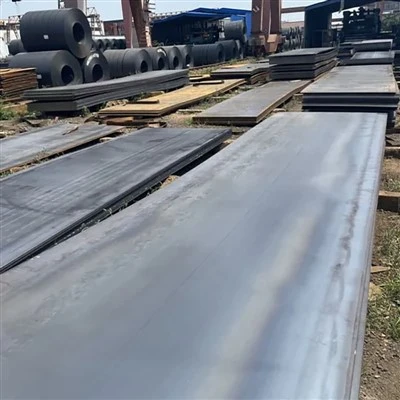
At the end of the day, heat resistance in stainless steel coil is a balance of alloy chemistry, manufacturing process, and end-use conditions. It’s not a single number; it’s a range, and the best coil for your job is the one that matches that range, not just the one with the highest max temp. If you’re planning a project that needs stainless steel coil for high-heat applications—whether that’s oven components, furnace liners, heat exchangers, or something else—we can walk you through the specs, test a sample if you need, and help you find the grade that will last as long as you need it to. Don’t guess on heat resistance; connect with our team to discuss your requirements and find the right stainless steel coil for your needs.
Aluminum Foil References:
- ASM International. (2020). Heat-Resistant Alloys for High-Temperature Applications. Materials Park, OH: ASM International.
- American Iron and Steel Institute. (2018). Stainless Steel Grade Data Sheet: 304, 316, 309H, 310H. Washington, DC: AISI.
- International Organization for Standardization. (2019). ISO 15797: Chemical Composition and Properties of Heat-Resistant Stainless Steels. Geneva, Switzerland: ISO.
- Stainless Steel Industry Association. (2021). Thermal Fatigue and Structural Stability of Cold vs. Hot Rolled Stainless Steel Coils. Chicago, IL: SSIA.
- NACE International. (2020). Corrosion Behavior of Stainless Steels Under High-Temperature Oxidizing Environments. Houston, TX: NACE.
Wuxi Jin Ming Jian De Industry & Trade Co., Ltd.
Wuxi Jin Ming Jian De Industry & Trade Co., Ltd. is one of the most professional stainless steel coil manufacturers and suppliers in China, also supports customized service. With abundant experience, we warmly welcome you to wholesale CE approved stainless steel coil in stock here from our factory. If you have any enquiry about quotation, please feel free to email us.
Address: 2102-2105, Yuexing Building, Guangnan Road, Liangxi District, Wuxi City, Jiangsu Province, China.
E-mail: info@wxjmjdss.com
WebSite: https://www.jmjdsteelexp.com/
