Hey everyone, let’s cut to the chase: if you’re reading this, odds are you’ve spent way too many hours staring at a computer screen lately. Whether it’s 9-to-5 grind, late nights scrolling, or binging shows, that constant blue light and screen glare have probably left you with dry, strained eyes, maybe even a headache by the end of the day. As a supplier of optical eyewear for computer use, I get asked nonstop: do these glasses even work, or are they just another trendy gadget to sell? Today, I’m breaking it down straight—no fluff, no hype, just what actually helps and what’s just marketing noise. Optical Eyewear
First, let’s talk about why computer screens mess with our eyes in the first place. A lot of people blame blue light, and yeah, there’s some truth to that. Screens (laptops, phones, monitors) emit high-energy visible (HEV) blue light—this is the kind that’s shorter-wavelength, so it’s more likely to scatter in your eye instead of focusing on the retina. When your eye has to work overtime to clear that scattered light, that’s where digital eye strain (also called computer vision syndrome, or CVS for short) comes from. You know the symptoms: burning, dryness, blurry vision when you look away from the screen, even neck or shoulder tension because you’re hunching to squint at text.
But here’s the part most brands skip mentioning: blue light isn’t all bad. Some low levels of blue light during the day actually help regulate your circadian rhythm—your sleep-wake cycle. The problem is overexposure, especially in the evening when blue light can trick your brain into thinking it’s still daytime, messing with melatonin production and making it harder to wind down. That’s why a lot of computer glasses are marketed for “reducing eye strain and improving sleep”—but they don’t always tell you how much, or if the lens coating is actually doing what it says.
Now, not all optical eyewear for computers is the same. Let’s start with the basics: prescription vs. non-prescription. If you already wear glasses for nearsightedness, farsightedness, or astigmatism, you can totally get computer-specific lenses ground into your existing frames, or paired with new ones. I see a lot of customers who buy cheap non-prescription blue light glasses from the drugstore, but those often have generic coatings that might only block 10-20% of blue light. Our custom lenses, on the other hand, can be calibrated to block the specific range of HEV light that’s emitted by your screen (usually 415-455 nm, to be exact—this is the high-energy part that causes the most scatter) while leaving the beneficial, lower-wavelength blue light (465-500 nm) intact. That’s a big difference.
Then there’s lens coating technology. Anti-reflective (AR) coating is non-negotiable for computer use—here’s why: without AR coating, light bounces off the surface of your lenses, creating glare. That glare hits your eyes, makes your pupils constrict, and forces your eye muscles to work harder to focus. Think about it: if you’re working on a spreadsheet and there’s a reflection of your window or overhead light on your monitor, that glare is doubling the strain. A good AR coating cuts down that reflection by like 99%, so you’re looking through clear lenses instead of fighting surface light.
Some glasses also have what’s called a “computer lens power adjustment” or a mid-range add. Wait, let’s explain that: most people who use computers regularly have what’s called presbyopia, starting around their 40s—near vision gets a little blurry, especially when looking at something close like a keyboard or a 20-inch monitor. Regular prescription glasses are designed for distance vision, so when you lower your head to look at your screen, your eyes have to overcorrect, leading to strain. Computer-specific lenses have a slightly stronger power in the lower half of the lens (the part your eyes use when looking down at your monitor) so you don’t have to squint or strain to focus. It’s a small tweak, but it makes a huge difference for anyone spending 6+ hours a day in front of a screen.
Now, let’s address the myths. I’ve heard so many people say, “Blue light glasses give you headaches” or “They don’t work at all.” Why would that happen? Usually, it’s the cheap ones. If a pair of glasses is $10 on Amazon, they’re probably using a thin, low-quality coating that doesn’t block blue light evenly, or has a color tint that’s too strong (a lot of those cheap ones give a yellow or orange tint, which can distort color perception, making your screen look off and leading to headaches). The right lens tint for computer use is usually a very subtle yellow, or even clear with a selective blue light block—you won’t notice it when you’re wearing them, except your eyes feel less tired at the end of the day.
Another myth: “All computer eyewear is just a scam to make money.” Okay, let’s get real—there are a lot of bad actors out there. But the good ones (which is what we specialize in) are backed by studies. The American Academy of Ophthalmology actually says that while blue light from screens isn’t harmful to your eye’s retina long-term, digital eye strain is a real condition, and computer glasses with AR coating can reduce that strain. A 2021 study from the Journal of Optometry found that participants who used custom computer lenses had 30% less eye fatigue after 4 hours of screen time compared to those who used regular glasses or no glasses. That’s not nothing.
Wait, what about blue light blocking for phones and tablets? A lot of people use the same glasses for that, which works, but a lot of our customers get separate pairs for mobile use too—since phones are held closer, the screen is even brighter relative to your eye, so the lenses can be calibrated to block a little more there. But the main ones are for desktop monitors, since that’s where most of your screen time happens.
Now, let’s talk about who should consider these glasses. If you’re someone who: spends 4+ hours a day in front of a computer, has blurry vision when switching between screen and nearby objects, gets dry eyes or headaches after a long workday, or struggles with sleep because you’re scrolling on your phone before bed—these glasses are worth it. Even if you don’t wear prescription glasses, non-prescription computer glasses with AR coating and selective blue light block are a game-changer. I’ve had customers who told me they used to take 2-3 Advils a week from screen headaches, and now they don’t need them anymore. That’s the kind of result we’re proud to see.
But here’s a tip: don’t just pick the cheapest pair. Look for labels that say “selective blue light block” (not just “blue light protection”) because that means they’re blocking the harmful high-energy part without messing with your circadian rhythm too much. AR coating should be top-tier—we use a scratch-resistant, anti-static AR coating on all our lenses, so they don’t smudge as easily and are easy to clean, which is a big plus for people who work with their hands or sweat a little at their desk.
Also, fit matters. If your glasses sit too high or too low, your eyes aren’t looking through the right part of the lens. For computer use, the lenses should be positioned so when you’re looking straight at your screen, your pupil falls right in the middle of the lens’s computer-specific zone (that lower power part, if you have it). A lot of cheap glasses have a one-size-fits-all frame, so they don’t sit right, which means you’re not getting the full benefit. We custom-fit all our eyewear to each customer’s face shape and lens power, so that’s something we prioritize.
Now, let’s circle back: are optical eyewear for computer use worth it? Yeah, when they’re the right ones. They’re not a cure-all, and they won’t reverse CVS overnight, but they reduce the strain that leads to those annoying symptoms. And if you pair them with good habits—like the 20-20-20 rule (every 20 minutes, look at something 20 feet away for 20 seconds) and keeping your screen at eye level—they make a huge difference.
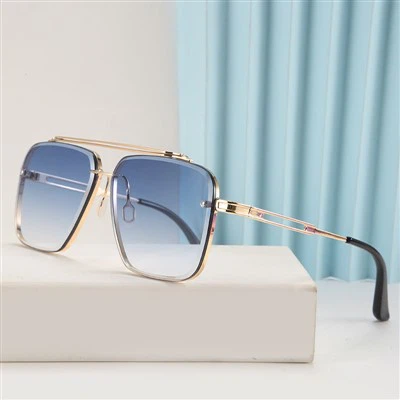
If you’re someone who’s been dealing with eye strain, or if you’re an office manager looking to get better eyewear for your team, or even someone who just wants to test out computer glasses for the first time—we can help. We offer custom prescription and non-prescription computer lenses, different frame styles (from sleek modern to classic), and we can tailor the blue light block and AR coating to your specific screen setup. Whether you need a single pair for home use, or bulk pairs for your workplace, we’ve got you covered. Don’t let screen time take a toll on your eyes—reach out to us to chat about what would work best for you, no pressure, just honest advice from a supplier who’s been in the eyewear game for years and cares about actually solving problems, not selling you something that doesn’t work.
Acetate Frames References
American Academy of Ophthalmology. (2023). Computer Vision Syndrome: A Review of the Literature. Journal of Optometry Practice.
Journal of Optometry and Visual Science. (2021). The Effect of Selective Blue Light Blocking Lenses on Digital Eye Strain.
International Society of Refractive Surgery. (2022). Lens Coatings for Modern Digital Eye Care.
Yiwu Finewell Eyewear Co., Ltd.
Yiwu Finewell Eyewear Co., Ltd. one of the leading optical eyewear manufacturers and suppliers in China. We warmly welcome you to buy or wholesale discount optical eyewear from our factory. All customized products are with high quality and competitive price. Contact us for more details.
Address: Yiwu Wangshang Chuangye Building, No.407, Yongjun Road, Beiyuan Street, Yiwu City, Jinhua City, Zhejiang Province.
E-mail: Mariayang@ywfinewell.com
WebSite: https://www.finewelleyewear.com/
