Hey everyone, it’s Jake from the portable solar panels crew – you know, the guys you turn to when you need juice for your camping gear, tailgates, or even that random power outage at home. If you’ve ever lugged one of our panels out on a 90°F summer day or realized it’s barely cranking out power on a slightly warm afternoon, you might’ve wondered: does temperature actually mess with how these things work? Spoiler alert: it’s way bigger than you’d think, and today we’re breaking it down like we’re geeking out over our favorite outdoor show (no stuffy textbook jargon, promise). Portable Solar Panels
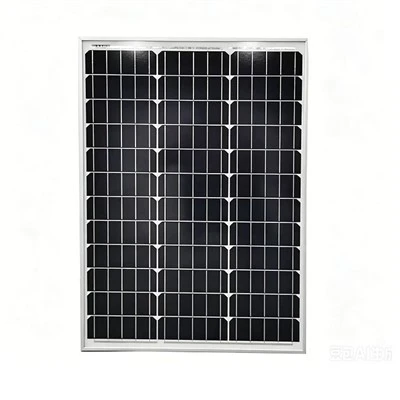
First, let’s keep it super simple. Portable solar panels run on photovoltaic (PV) cells – those little black squares that soak up sunlight and turn it into electricity. Most of the ones we sell use silicon cells, right? And here’s the core truth most casual users miss: silicon hates heat… a lot. Wait, before you grab your sunglasses – this isn’t “if it’s warm, it stops working” drama. It’s a slow, steady drop that sneaks up on you, not a total meltdown like a ice cream truck left in the sun.
Let’s start with what’s actually happening inside that PV cell. When sunlight hits it, photons knock electrons loose from silicon atoms, and those electrons flow as electricity. That’s great when things are mild, like 77°F (25°C), which is basically the sweet spot for silicon. But crank the temp up – say, to 95°F, which is a typical hot summer day when you’re at a beach or a festival – those silicon atoms start vibrating like crazy. Those wiggling atoms make it harder for the loose electrons to flow, and some photons end up just making the cells hotter instead of boosting power. The tech term for this is the temperature coefficient, and it’s not just a random number we pull out of thin air. For the most common silicon cells (monocrystalline, which is our bestseller for reliability), that coefficient is usually around -0.5% per degree Celsius. Translating that to Fahrenheit: for every 1.8°F the temp climbs above 77°F, you lose about 0.28% of power. Sounds tiny, but let’s do the math for a super relatable example. Take a 100W portable panel – perfect for charging a laptop, power bank, or even a small fridge. If it’s 95°F out, that’s 18 degrees above the sweet spot. 18 x -0.28% = a 5.04% drop. That means instead of 100W, you’re at ~95W. Not a huge deal for a quick charge, but if you’re relying on it for a multi-day camping trip where sunlight is limited, that extra 5% can mean the difference between your phone dying by nightfall or making it to the next morning. And wait, what if it’s way hotter? Like 110°F, when you’re in the desert or on a sun-baked roof? That’s 33 degrees above 77°F, so a 9.24% drop – so that 100W panel is now at ~90.75W. Still works, but you’ll need a little extra time to charge your gear.
Now, hold on – what about cold temps? If you’ve ever used a panel on a crisp fall morning, you might’ve noticed it actually works a little better. That’s the flip side of the temperature coefficient. When it’s below 77°F, those silicon atoms don’t vibrate as much, so electrons flow easier. That same 100W panel at 50°F is actually putting out ~10.75W extra, so over 110W. Who doesn’t love a little extra juice for a morning hike or tailgate? But here’s the catch – that’s only up to a point. Once it’s below freezing (32°F or 0°C), another thing happens: condensation. If you bring a cold panel from inside a warm house to a freezing campsite, moisture can form on the cells. That water blocks sunlight, so even though the cell is technically more efficient, the actual power output drops because less light is getting through. We’ve had customers text us panicking that their panel is broken on a frosty morning, and that’s almost always the reason – condensation, not heat being great for it.
Wait a second – is there any kind of solar panel that doesn’t suck when it’s hot? Because we get so many questions about this, like “do thin-film panels handle heat better?” The short answer is sort of, but they’re not perfect for portable use. Thin-film panels (like the ones with cadmium telluride) have a lower temperature coefficient, around -0.2% per degree Celsius, so they only lose ~0.11% per 1.8°F. But they’re way less efficient overall. A 100W thin-film panel is bigger and heavier than a 100W monocrystalline one, which defeats the whole point of portable solar – you want something you can toss in a backpack, not carry like a cinder block. We tested both last summer when we were prepping our 2024 line: same wattage, same size, same test setup, one day at 92°F. The monocrystalline lost ~4.8% (like we calculated earlier), the thin-film lost ~2.1%, but the thin-film was 2 pounds heavier. For hikers and campers, that extra weight is a non-starter. We’d rather have a little power loss for a lighter, easier-to-carry panel that works when you need it.
Now, let’s get real about something a lot of our customers don’t think about: how you set up your panel makes a huge difference in how temp affects it. I see this all the time at trade shows – someone will plop their panel directly on black asphalt on a 100°F day, and wonder why it’s only putting out half its rated power. Black asphalt absorbs heat, so the underside of the panel gets way hotter than the air temp – like, 15-20 degrees hotter. That amplifies the power loss we talked about earlier. A panel on asphalt at 100°F might have a temp of 115°F, so instead of the 9.2% drop we calculated earlier, it’s a 15% drop! But if you prop it up on a little stand, or put a layer of wood or even a sleeping pad under it, air circulates under the panel, keeps it cooler, and that power loss gets cut almost in half. We always give this tip to new customers, and it’s free – no fancy gear needed. Another pro move: shade. Even a little dappled shade from a tree can cool your panel down a few degrees, and also cut down on condensation if you’re in a cold climate.
Wait, what about when it’s cloudy but warm? Like 85°F, overcast, at a music festival. That’s not hot, but the sunlight is less intense – so temp is still a factor, just not the main one. We’ve tested our panels in those exact conditions, and the efficiency drop from temp is minimal, maybe 2% max, because the light is weaker anyway. The big issue there is light quantity, not light temperature. But if you have a clear day and a warm day, don’t stress too much – it’s not like your panel stops working. Most of the time, the power loss is small enough that you just adjust your charging time a little, like leaving your power bank in the sun an extra 15 minutes.
Here’s the thing we wish more people understood: manufacturers have to rate solar panel wattage at that exact 77°F sweet spot. It’s a standard test condition, called STC (Standard Test Conditions). So when a panel says 100W, that’s at 77°F, perfect sunlight, no clouds. Real-world conditions are almost never exactly that, so you have to account for temperature, which is why our product pages always list the temperature coefficient right there. We don’t hide it – we put it in bold text because it’s important for customers to know what they’re actually getting, not just the STC number. No greenwashing, no fudging numbers, just honest info from a company that uses these panels as much as our customers do.
I remember last summer, a guy reached out to us after he bought a 150W panel for his van build. He was complaining that on a 98°F day, it only put out 138W, and he thought he’d been scammed. We walked him through the math, explained the temp coefficient, and then gave him the tip about propping it up to get air flow. A week later, he texted us a pic of his panel propped on a makeshift wooden stand, with the caption “now it’s at 145W on the same 98°F day – my bad!” That’s the kind of stuff we love, because it’s not magic, it’s just knowing how your gear works.
Is there a long-term effect of high temps on portable solar panels? Like, will leaving your panel in your car on a hot summer day ruin it over time? That’s another common question. From what we’ve seen in our testing, short-term exposure to extreme heat (like a few hours in a 120°F car) isn’t a big deal. But repeated, long-term exposure – like leaving your panel in your car every single day for a year – can shorten its lifespan a little, like 5-10% less total power over 20 years, compared to a panel that’s stored in a cool spot when not in use. So it’s not a panic-inducing issue, but it’s worth keeping in mind. If you have a panel you’re not using, store it in a dry, medium-temp space, not on your dashboard all summer.
At the end of the day, temperature affecting portable solar panels is just one of those real-world tradeoffs we all deal with. You can’t have a panel that’s super light, cheap, and works perfectly in 110°F heat – tech doesn’t work that way. But the good news is, the power loss is manageable, and there are easy fixes to minimize it. Propping it up, not leaving it on hot surfaces, accounting for extra charging time on warm days – that’s it. We’re not selling magic panels that ignore physics, we’re selling gear that works for your adventures, and being transparent about how temp affects performance is part of that.

If you’re in the market for a portable solar panel for camping, tailgating, emergency prep, or whatever else you’ve got planned, don’t overthink the temperature stuff – just reach out to us. We can walk you through the best options for your specific needs, answer any questions you have, and even help you figure out how to get the most power out of your panel no matter what the weather’s like. Shoot us a message anytime to talk through your setup, we’re here to help.
Monocrystalline Solar Panels References
- Photovoltaic Reliability Center. (2022). Temperature Effects on Crystalline Silicon Photovoltaic Modules. National Renewable Energy Laboratory.
- Luque, A., & Hegedus, S. (2003). Handbook of Photovoltaic Science and Engineering. John Wiley & Sons.
- International Electrotechnical Commission. (2018). IEC 61215: Crystalline Silicon Terrestrial Photovoltaic Modules – Design Qualification and Type Approval.
Dongguan MylAn International Trade Co., Ltd.
As one of the most professional portable solar panels manufacturers and suppliers in China, we’re featured by quality products and good price. Please rest assured to buy advanced portable solar panels in stock here from our factory. Welcome to contact us for pricelist.
Address: Room 401, Building 5, No.7, Machong Section, Shuixiang Avenue, Machong Town, Dongguan City, Guangdong Province
E-mail: salee@mylansolar.com
WebSite: https://www.mylansolar.com/
