How to Test the Performance of Disc Spring DIN2093/EN16983?
As a supplier of Disc Spring DIN2093/EN16983, I understand the critical importance of ensuring the performance of these springs. Disc springs, also known as Belleville washers, are widely used in various industries due to their high load capacity, compact size, and ability to provide a constant spring force over a relatively small deflection range. In this blog post, I will share some insights on how to test the performance of Disc Spring DIN2093/EN16983 to meet the requirements of different applications. Disc Spring DIN2093/EN16983

1. Understanding the Standards
Before conducting any performance tests, it is essential to have a clear understanding of the DIN2093 and EN16983 standards. DIN2093 is a German standard that specifies the dimensions, tolerances, and technical requirements for disc springs. EN16983 is a European standard that provides additional guidelines for the design, manufacture, and testing of disc springs. These standards ensure the quality and interchangeability of disc springs, making them suitable for a wide range of applications.
2. Testing Equipment
To accurately test the performance of Disc Spring DIN2093/EN16983, you will need the following equipment:
- Universal Testing Machine: This machine is used to apply a controlled load to the disc spring and measure the resulting deflection. It should have a high precision and a sufficient load capacity to handle the maximum load requirements of the disc spring.
- Deflection Measuring Device: A micrometer or a dial gauge can be used to measure the deflection of the disc spring accurately. The measuring device should have a high resolution and be able to measure small deflections.
- Temperature Control Chamber: Some applications may require the disc spring to operate at specific temperatures. A temperature control chamber can be used to simulate different temperature conditions and test the performance of the disc spring under these conditions.
3. Testing Procedures
3.1 Load-Deflection Test
The load-deflection test is one of the most important tests for disc springs. It measures the relationship between the load applied to the disc spring and the resulting deflection. The test procedure is as follows:
- Prepare the Testing Machine: Set up the universal testing machine according to the manufacturer’s instructions. Make sure the machine is calibrated and the load cell is accurate.
- Mount the Disc Spring: Place the disc spring between the platens of the testing machine. Make sure the spring is centered and aligned properly.
- Apply the Load: Gradually apply a load to the disc spring at a constant rate. Record the load and the corresponding deflection at regular intervals.
- Plot the Load-Deflection Curve: Plot the load-deflection data on a graph. The curve should be a straight line within the elastic range of the disc spring. The slope of the curve represents the spring rate of the disc spring.
3.2 Fatigue Test
The fatigue test is used to evaluate the durability of the disc spring under repeated loading. The test procedure is as follows:
- Prepare the Testing Machine: Set up the universal testing machine to apply a cyclic load to the disc spring. The load should be within the elastic range of the disc spring.
- Mount the Disc Spring: Place the disc spring between the platens of the testing machine. Make sure the spring is centered and aligned properly.
- Apply the Cyclic Load: Apply a cyclic load to the disc spring at a specified frequency and amplitude. Record the number of cycles until the disc spring fails.
- Analyze the Results: Analyze the fatigue test results to determine the fatigue life of the disc spring. The fatigue life is the number of cycles that the disc spring can withstand before failure.
3.3 Temperature Test
The temperature test is used to evaluate the performance of the disc spring at different temperatures. The test procedure is as follows:
- Prepare the Temperature Control Chamber: Set the temperature control chamber to the desired temperature. Make sure the temperature is stable before starting the test.
- Mount the Disc Spring: Place the disc spring in the temperature control chamber. Make sure the spring is centered and aligned properly.
- Apply the Load: Apply a load to the disc spring at the specified temperature. Record the load and the corresponding deflection.
- Analyze the Results: Analyze the temperature test results to determine the effect of temperature on the performance of the disc spring. The performance of the disc spring may change with temperature, so it is important to test the spring at different temperatures to ensure its reliability.
4. Interpreting the Test Results
Once the tests are completed, it is important to interpret the test results to determine the performance of the disc spring. The following factors should be considered when interpreting the test results:
- Spring Rate: The spring rate is the slope of the load-deflection curve. It represents the stiffness of the disc spring. A higher spring rate indicates a stiffer spring, while a lower spring rate indicates a softer spring.
- Maximum Load Capacity: The maximum load capacity is the maximum load that the disc spring can withstand without permanent deformation. It is important to ensure that the disc spring can handle the maximum load requirements of the application.
- Fatigue Life: The fatigue life is the number of cycles that the disc spring can withstand before failure. It is important to ensure that the disc spring has a sufficient fatigue life to meet the requirements of the application.
- Temperature Effect: The performance of the disc spring may change with temperature. It is important to test the spring at different temperatures to ensure its reliability under different operating conditions.
5. Quality Control
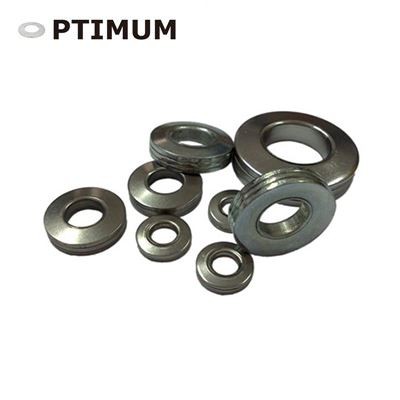
To ensure the quality of the Disc Spring DIN2093/EN16983, it is important to implement a comprehensive quality control system. The quality control system should include the following steps:
- Raw Material Inspection: Inspect the raw materials used to manufacture the disc spring to ensure their quality. The raw materials should meet the requirements of the DIN2093 and EN16983 standards.
- Manufacturing Process Control: Control the manufacturing process to ensure that the disc spring is manufactured to the required specifications. The manufacturing process should include heat treatment, machining, and surface treatment.
- Finished Product Inspection: Inspect the finished disc spring to ensure its quality. The inspection should include dimensional inspection, load-deflection testing, and fatigue testing.
6. Conclusion
Conical Spring Washer Testing the performance of Disc Spring DIN2093/EN16983 is essential to ensure its quality and reliability. By following the testing procedures and interpreting the test results, you can determine the performance of the disc spring and ensure that it meets the requirements of the application. As a supplier of Disc Spring DIN2093/EN16983, I am committed to providing high-quality products and services to my customers. If you have any questions or need more information about our products, please feel free to contact me for further discussion and potential procurement.
References
- DIN 2093:2015-07, Disc springs – Calculation and design.
- EN 16983:2017, Spring washers – Belleville and conical spring washers.
Yangzhou Optimum Spring Manufacturing Co., Ltd.
As one of the most professional disc spring din2093/en16983 manufacturers and suppliers in China, we’re featured by quality products and good service. Please rest assured to buy customized disc spring din2093/en16983 made in China here from our factory. For more information, contact us now.
Address: No.9 West of Shuangtang Rd, Yangzhou, P.R. China 225000
E-mail: susie@optimum-spring.com
WebSite: https://www.optimum-spring.com/
