What is the shear strength of specialty paper?
As a supplier of specialty paper, I’ve witnessed firsthand the ever – evolving needs and importance of understanding the various properties of our products. One such fundamental yet often overlooked attribute is the shear strength of specialty paper. Specialty Paper

Shear strength, in the context of specialty paper, refers to the paper’s ability to resist forces that act parallel to its surface and tend to cause one layer of the paper to slide or shear relative to an adjacent layer. This is a crucial characteristic as it determines the paper’s performance in many real – world applications.
To understand why shear strength is so essential, we need to look at the diverse range of applications where specialty paper is used. Specialty papers are not your typical office or printing papers. They are designed and engineered to meet specific requirements in industries such as packaging, labeling, construction, and even electronics.
In the packaging industry, for example, specialty paper is frequently used to create boxes, envelopes, and other containers. These packages are subject to various handling and transportation conditions. During loading and unloading, they may be pushed, pulled, or squeezed in ways that apply shear forces. If the paper does not have sufficient shear strength, it can easily tear or delaminate, compromising the integrity of the package and potentially damaging the contents inside.
Take heavy – duty shipping boxes as an example. These boxes are often filled with bulky and heavy items. When they are stacked on top of each other during transit, the papers on the sides of the boxes experience shear forces due to the weight distribution and the movement of the stack. A high – shear – strength specialty paper can withstand these forces without failing, ensuring that the box remains intact and the product is well – protected.
In the labeling industry, shear strength is also of great significance. Labels are often applied to curved or irregular surfaces, and they need to adhere firmly without peeling off. The shear forces that occur when the labeled object is handled or moved can cause the label to separate from the surface. Specialty papers with high shear strength can better resist these forces, maintaining a strong bond between the label and the substrate. This is particularly important for products that are exposed to harsh environments or undergo frequent handling, such as industrial equipment labels or outdoor product labels.
Now, let’s delve into the factors that affect the shear strength of specialty paper.
Fiber Composition
The type of fibers used in the paper – making process plays a vital role in determining its shear strength. Natural fibers like wood pulp are commonly used in specialty paper production. Hardwood and softwood fibers have different characteristics. Softwood fibers are generally longer and more flexible, which can contribute to better inter – fiber bonding. This enhanced bonding helps to resist shear forces. On the other hand, hardwood fibers are shorter and stiffer, but they can also add to the overall strength of the paper when used in combination with softwood fibers.
Some specialty papers may also incorporate synthetic fibers, such as polyester or nylon. These synthetic fibers can significantly improve the shear strength of the paper due to their high – strength properties. They are often used in applications where extreme durability is required, such as in certain types of industrial tapes or protective packaging materials.
Paper Structure
The way the fibers are arranged and bonded within the paper also impacts its shear strength. Paper can have a single – layer or multi – layer structure. In a multi – layer paper, the interaction between the layers is crucial. Strong inter – layer bonding can prevent the layers from sliding against each other under shear forces. This can be achieved through processes like calendering, which compresses the paper and improves the adhesion between the layers.
The density of the paper also affects its shear strength. A higher – density paper generally has more fibers per unit volume, resulting in stronger inter – fiber bonding. However, it’s a delicate balance, as increasing the density too much can make the paper more brittle and less flexible, which may have other negative impacts on its performance.
Chemical Additives
Chemical additives can be used to enhance the shear strength of specialty paper. For example, wet – strength resins are commonly added to paper to improve its strength when it comes into contact with water. These resins can also contribute to the paper’s dry – state shear strength by strengthening the inter – fiber bonds. Other additives, such as polymers or starches, can be used to modify the surface properties of the paper, improving its adhesion and resistance to shear forces.
Measuring the shear strength of specialty paper is a scientific process. There are several industry – standard test methods available. One commonly used method is the double – lap shear test. In this test, two strips of paper are bonded together, and a shear force is applied parallel to the bonded surface until the bond fails. The maximum force required to cause the failure is recorded, and this value is used to calculate the shear strength of the paper.
Another method is the single – lap shear test, where a single strip of paper is bonded to a rigid substrate, and a shear force is applied to the free end of the paper. This test is often used to evaluate the shear strength of paper – to – substrate bonds, which is important in applications like labeling.
As a specialty paper supplier, we are constantly striving to improve the shear strength of our products. We work closely with our customers to understand their specific needs and develop papers that meet or exceed their requirements. We invest in research and development to explore new fiber sources, paper – making processes, and chemical additives that can enhance the shear strength of our specialty papers.
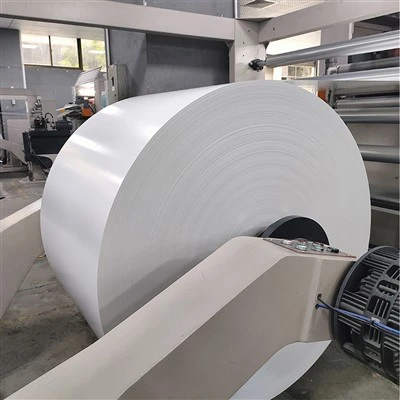
We also offer a wide range of specialty papers with different shear – strength characteristics to suit various applications. Whether you need a high – shear – strength paper for heavy – duty packaging or a paper with moderate shear strength for everyday labeling, we have the solution for you.
Color Offset Paper If you are in the market for specialty paper and are concerned about shear strength, we invite you to engage in a discussion with us. Our team of experts is ready to provide you with in – depth information, samples, and technical support. We understand that every application has unique requirements, and we are committed to helping you find the perfect specialty paper for your project. Reach out to us today to start the conversation about how our specialty papers can meet your shear – strength needs.
References
- ASTM International. "Standard Test Methods for Shear Strength of Adhesives in Single – Lap – Joint by Tension Loading (Metal – to – Metal)." ASTM D1002.
- TAPPI (Technical Association of the Pulp and Paper Industry). "Test Methods for Paper and Paperboard." Various standards related to paper strength properties.
- Pizzi, A. "Handbook of Adhesive Technology." Chapman & Hall, 1994.
Dongguan Banyan Material Co., Ltd.
We are one of the most experienced specialty paper manufacturers and suppliers in China, also support customized service. Please feel free to wholesale bulk eco-friendly specialty paper from our factory. Quality products and reasonable price are available.
Address: NO.167, Meijing West Road, Songmushan, Dalang Town, Dongguan City, Guangdong Province, China
E-mail: Sales_chris@yspaper.com
WebSite: https://www.paperyoung.com/
