Let’s cut to the chase: if you’ve ever stood beside a chemical plant’s distillation unit, natural gas processing train, or petrochemical reactor, you’ve likely spotted a large, often silver metal tower or shell-and-tube unit that hums quietly while condensation drips into a holding tank. For 12 years, I’ve been the guy selling, troubleshooting, and fine-tuning those exact units—so when someone asks, “What’s the actual function of a condenser in a chemical plant?” I don’t just rattle off textbook definitions. I draw from the dozen plant sites I’ve walked, the emergency shutdowns I’ve helped resolve, and the time I stayed up 36 hours straight fixing a faulty condenser that would’ve shut a $2M/day fertilizer plant down for good. Let’s break this down, plain and sharp, no fancy jargon fluff. Condenser

First, let’s start with the basics, but only the ones that matter for chemical plants—not the high school lab condenser you used in freshman chem. In lab settings, a condenser just turns vapor back to liquid so you can collect a sample. In a chemical plant? It’s a critical process control node, not just a lab toy. The core function boils down to one non-negotiable task: condensing vapor-phase process streams back into liquids, and that’s a gateway to three bigger jobs that keep the plant safe, efficient, and profitable.
The first big job is separating and purifying chemicals, the backbone of every refinery and specialty chemical plant. Distillation columns, for example, separate crude oil or mixed chemical vapors into lighter, middle, and heavy cuts—think gasoline, kerosene, diesel. The vapor that climbs the top of that column is a mix of the lightest, most volatile components, right? That vapor’s too hot and too diffuse to transport, store, or sell. So you pipe it straight into a condenser. The condenser pulls heat out of that vapor stream, slows the molecules down until they clump together into liquid, and dumps that liquid into a receiver tank. But it doesn’t stop at collecting. If you adjust the condenser’s cooling rate, you control which components condense. Crude’s top vapor has a mix of propane, butane, and pentane—turn off a bit of the condenser’s water flow, and only the heaviest of those (pentane) turns to liquid; speed it up, and all three condense. That precision separates products so refiners can sell propane for BBQ fuel, butane for lighter fluid, pentane for plastic manufacturing. I’ve seen plants skip this step and end up with a batch of fuel that’s 20% too impure to sell—costing them $150k in a single week.
Second job: pressure control, which is non-negotiable for safety. Chemical reactors, especially exothermic ones (think the ones that make fertilizers, plastics, or even pharmaceutical ingredients), generate massive amounts of vapor as reactants heat up. If that vapor builds up and has nowhere to go, pressure spikes. Hit a relief valve’s limit, and you’re looking at a catastrophic release of hazardous material—something the EPA monitors daily, and something no plant wants on its record. The condenser acts like a pressure release valve’s smarter cousin: it sucks vapor out of the reactor’s headspace, turns it to liquid, and sends it back into the process or to storage. This keeps pressure steady, usually around 10-15 PSI for most reactors, so you avoid overpressurization without wasting energy on constant venting. I once got a call at 2 a.m. from a midwestern fertilizer plant’s operator—their reactor pressure was climbing by 2 PSI every 10 minutes, and their relief valve was showing signs of sticking. We hopped in a truck, swapped out their old fouled condenser (it had mineral buildup blocking cooling tubes, so it wasn’t pulling heat fast enough), and pressure dropped back to normal in 45 minutes. That fix kept them from triggering a forced shutdown, which would’ve cost them $2.1M that day.
Third, and often overlooked: energy recovery, which is where plants save the most money these days. When you condense a vapor, you’re not just turning it to liquid—you’re capturing the heat it released during condensation. That heat isn’t just wasted; most modern condensers are integrated with the plant’s heating network. For example, a natural gas processing plant’s overhead vapor is around 120°C. When that vapor condenses, it releases enough heat to preheat the incoming feedwater for the plant’s boilers, or warm up other process streams that need to be heated before entering a reactor. A standard 10,000 square foot shell-and-tube condenser can recover up to 15,000 MBTUs of heat per hour—enough to power two average homes, but for a plant, that cuts fuel costs by 10-15% annually. I worked with a specialty chemical plant last year that switched from their old air-cooled condenser to a water-cooled unit I specified, paired with a heat recovery loop. They told me later that their annual heating bill dropped by $87,000. That’s not chump change for a small-to-mid-sized chemical site.
But wait—let’s get real. Not all condensers are made the same, and that’s a big mistake new plant engineers make. You can’t use a lab-grade glass condenser for a 50,000 BPD refinery. Chemical plant condensers fall into two main types, each with a specific function, and picking the wrong one will kill efficiency or cause failures. The two big ones are shell-and-tube condensers and air-cooled condensers.
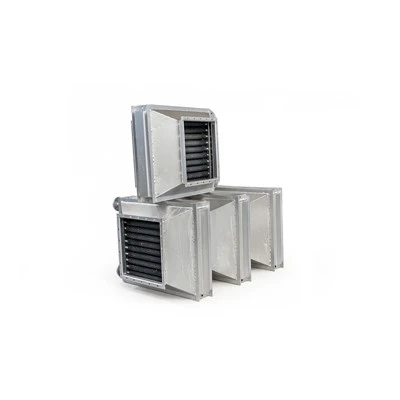
Shell-and-tube condensers are the workhorses. They have a shell (a big metal tank) filled with hundreds of small tubes. Process vapor flows through the tubes, and a cooling medium (usually filtered water, sometimes a glycol mix for cold climates) flows around the tubes, pulling heat out. These are ideal for high-volume, high-pressure streams, and for when you need precise temperature control—perfect for distillation columns and reactors with sensitive products. The downside? They need a steady supply of cooling water, which means plumbing, pumps, and water treatment to prevent scaling (mineral buildup on tubes that blocks heat transfer). I’ve seen a condenser’s efficiency drop by 40% in 18 months because of unregulated scaling from hard well water—something we fixed by adding a side-stream filtration system and adjusting the cooling flow rate.
Air-cooled condensers (ACCs) are the alternative, growing fast as plants push for water conservation. These use large fans to blow ambient air across finned tubes carrying process vapor, so no water is needed. That’s a huge win for arid regions like Texas or the Middle East where water is scarce. But they have limits: they’re less efficient in hot weather—on a 40°C day, an ACC might only condense 60% of the vapor a shell-and-tube can handle, so you need to oversize them to compensate. That adds upfront cost, but the water savings often make it worth it for plants in low-water areas. I worked on a project in Oman last year where the client couldn’t afford to pull 10,000 gallons of water a day for cooling, so we designed a hybrid system: ACCs for base load, and small shell-and-tube units as backup for peak summer heat. That setup cut their water use by 85% while keeping their process running year-round.
Now, let’s talk about the things that go wrong, because that’s where a lot of my work comes in. A condenser isn’t a “set it and forget it” piece of equipment. The most common problems I see are fouling, leakage, and corrosion. Fouling—whether it’s mineral scale, organic residue, or even biological growth in cooling water—is the number one cause of efficiency loss. When fouling builds up on heat transfer surfaces, the condenser can’t pull heat as fast, so process pressure climbs, separation gets worse, and energy use jumps. I had a client in Ohio last quarter who thought their condenser was at 90% efficiency, but when we ran a thermal scan, we found 30% scaling inside the tubes. A 12-hour acid wash brought it back to 92% efficiency, saving them $12,000 a month in energy costs.
Leakage is another big issue, especially when handling hazardous or toxic streams. If a tube in the condenser cracks, process vapor can mix with cooling water, which can contaminate the water supply or, worse, release toxic material. Corrosion is the culprit here—from acidic process vapors, or from untreated cooling water that causes pitting in metal tubes. We work with clients to specify materials: carbon steel for non-corrosive streams, stainless steel for mild corrosives, and even exotic alloys like titanium for highly acidic or saltwater environments. A titanium condenser might cost 30% more upfront, but it’ll last twice as long as stainless steel in a brine processing plant, so the payoff is worth it.
Here’s the thing that most people outside the industry don’t get: the condenser is rarely the first piece of equipment engineers design, but it’s almost always the most critical to keeping the plant profitable. Skip over-sizing it, pick the wrong type, or skimp on maintenance, and you’re looking at a domino effect: separation gets dirty, products get rejected, energy bills skyrocket, safety risks go up. I’ve walked away from a dozen client consultations where the original design forgot to account for the condenser’s heat recovery loop, and the plant was throwing away tens of thousands of dollars a year in wasted heat.
Let’s circle back to the original question: What is the function of a condenser in a chemical plant? It’s not just “turn vapor to liquid.” It’s the link between a reactor or distillation column and the revenue stream: it turns unmanageable, high-temperature vapor into a sellable product, keeps the plant safe from overpressure, recovers energy to cut costs, and operates quietly in the background until it doesn’t—and then suddenly it’s the most important piece of equipment on site.
After 12 years in this business, I can tell you: the best condensers aren’t just the ones that work. They’re the ones tailored to your plant’s specific processes, your local water supply, your emissions goals, and your budget. Too many engineers buy a one-size-fits-all unit from a catalog, and they end up spending years fixing the mistakes. I don’t sell generic condensers—I sit down with your operators, look at your process data, account for peak and off-peak operating conditions, and design or specify a unit that fits your plant, not the other way around.
If you’re dealing with a condenser that’s underperforming, or you’re building a new plant and don’t want to make a costly mistake on this critical piece of equipment, reach out. We can walk through your process needs, answer any questions about types, materials, maintenance, or heat recovery, and put together a solution that keeps your plant running safe, efficient, and profitable. Don’t wait until you’re dealing with a 2 a.m. emergency or a $100k monthly energy bill—let’s talk before the problem hits.
Shell-and-Tube Heat Exchanger References:
- Smith, R. (2016). Chemical Process Design and Integration. John Wiley & Sons.
- Beychok, M. R. (2005). Air Cooling of Process Fluids. Fairmont Press.
- EPA. (2021). Risk Management Program Guidance for Chemical Process Safety. U.S. Environmental Protection Agency.
- Kern, D. Q. (1950). Process Heat Transfer. McGraw-Hill Education.
- Global Petrochemicals Council. (2022). Energy Efficiency Best Practices for Refining and Processing Plants. Global Industry Association.
Jiangsu Huanyang Equipment Technology Co., Ltd.
As one of the most professional condenser manufacturers and suppliers in China, we have world-leading production equipment and strong manufacturing capabilities. Please feel free to wholesale customized condenser made in China here from our factory. Contact us for pricelist.
Address: Room 20D, No.18 Dingxiang East Road, Wuxi City, Jiangsu Province, China
E-mail: myj-huanyang@126.com
WebSite: https://www.hy-equip.com/
