If you’ve ever stuck an EU standard plug into a wall socket, you’ve probably given little thought to the small, rigid brass pins that make that connection. But as someone who’s supplied these pins for over a decade, I can tell you they’re far from afterthoughts. Every day, I get questions from electricians, appliance manufacturers, and even home DIYers asking a single, deceptively simple question: What’s the maximum power an EU standard plug pin can safely handle? The answer isn’t just a number—it’s a mix of engineering, international standards, and real-world use cases that shape how we design and deliver the components that keep millions of homes and businesses powered. Eu Standard Plug Pin

To get to the root of this, we have to start with what makes an EU plug pin what it is. Unlike US plugs, which have two flat or three angled pins, EU standard pins are round, rigid, and made almost exclusively of high-conductivity brass—for good reason. Brass is a copper-zinc alloy that balances conductivity, durability, and machinability, which is critical for manufacturing thousands of uniform pins that fit consistently into wall sockets. But before we dive into power ratings, let’s ground this in the official standards that govern EU plugs, because that’s where all the safety limits originate. The key standard here is IEC 60884-1, the international standard for plugs and socket-outlets for household and similar purposes, adopted across all EU member states as EN 60884-1. This standard doesn’t just tell you what a pin looks like—it defines its dimensions, material, and most importantly, its rated current, which directly translates to maximum power.
Wait, why current and not power? Because power (measured in watts) is simply voltage multiplied by current (P = V × I), and in the EU, standard household voltage is 230V, 50Hz. So if we know a pin’s maximum rated current, we can easily calculate its maximum power. But here’s the catch: the rated current for an EU plug and its pins isn’t a random number. For the most common standard plug—Type C, the two-pin ungrounded plug used for everything from phone chargers to table lamps—the rated current is 2.5A. That translates to a maximum power of 575W (230V × 2.5A). But wait, there’s another common plug: Type F, the two-pin grounded plug with earth clips on the sides, used for higher-power appliances like space heaters, washing machines, and power tools. Type F plugs have a rated current of 16A, which works out to 3,680W (230V × 16A). That’s a huge difference, and it’s where most of the confusion comes in. People often lump all EU plug pins together, but the pin design, material thickness, and contact surface are tailored to the plug’s intended current rating.
But here’s where it gets more interesting than just the standard numbers. At our factory, we test every batch of pins we produce to make sure they can handle more than just the static rated current. Real-world use is messy: plugs get jostled, heated up, wiggled in and out of sockets hundreds of times. That’s why the standard includes overload and thermal testing. A pin that can handle 16A at room temperature might fail if it heats up too much during continuous use. When current flows through a conductor, it encounters resistance, which generates heat—this is Joule heating, and it’s the single biggest limit on how much power a pin can handle. If the heat builds up faster than it can dissipate, the pin will overheat, soften, or even melt, which can cause socket damage, electrical arcing, or even fires.
So how do we make sure a pin doesn’t overheat? Let’s talk about the design specs of a 16A Type F pin, because that’s the most common high-power EU pin in use today. A standard 16A EU plug pin is 4mm in diameter and 18mm long, with a smooth, uncoated brass surface (some higher-quality pins have a thin tin or nickel plating for corrosion resistance, but the core material is still brass). The cross-sectional area of this pin is about 12.57mm², which is large enough to handle 16A without excessive heat. Our test data shows that under continuous 16A load, the surface temperature of a properly manufactured 16A pin tops out at around 65°C, well below the 85°C maximum allowed by EN 60884-1 for plug components. Compare that to a 2.5A Type C pin, which is only 2.5mm in diameter (about 4.91mm² cross-sectional area)—smaller, lighter, and designed for lower power, with a maximum surface temperature under load of around 55°C, well within safety limits for low-wattage devices.
But here’s a critical caveat: the rated current of the plug and its pins isn’t the same as the maximum power you should plug into a socket. Wait, why? Because the socket itself has limits, and the plug’s pins only conduct power between the cord and the socket. For example, even if a 16A pin can handle 16A, you still need to make sure the appliance you’re plugging in doesn’t draw more than that, and that the wall circuit it’s connected to is protected by a 16A circuit breaker. Plugging a 3,500W space heater (which draws ~15.2A at 230V) into a standard 16A Type F plug is close to the limit, but it’s generally safe for short periods—just don’t daisy-chain it into an extension cord with other high-power devices, because that adds more resistance and more heat points. For our part, we always advise customers that our pins are tested to 120% of their rated current for short periods (like startup surges from power tools or heaters) and 100% for continuous use, so that’s a safe buffer for most real-world applications.
I’ve seen what happens when pins are made to lower quality standards, too. Early in my career, we had a client who imported cheap 16A pins from a non-EU manufacturer, made from thinner brass (only 3mm diameter instead of 4mm) and with a lower zinc content that made the brass softer. Within six months, they started getting returns from appliance brands, saying their plugs were overheating and melting inside sockets. When we tested those pins, we found that under continuous 16A load, their surface temperature hit 110°C—way above the safety limit. The thin brass couldn’t handle the current, the pin deformed, and the electrical connection became loose, causing arcing. That’s why compliance with EN 60884-1 isn’t just a box to tick—it’s a matter of safety. All our pins are third-party tested by EU-accredited labs to meet or exceed the standard, so our customers don’t have to worry about that kind of failure.
Another common question I get: can a single pin handle more power if it’s made of a better material? For example, pure copper is more conductive than brass, so would a copper pin handle more than 16A? The short answer is yes, but it’s not practical. Pure copper is softer than brass, so it would deform more easily when inserted into the socket, leading to a loose connection over time. A loose connection creates more resistance, which creates more heat, even if the material is more conductive. Brass is a perfect balance: it’s conductive enough, rigid enough to maintain contact pressure, and affordable enough to mass produce. We’ve tested copper pins, but we don’t offer them as a standard product because they don’t hold up to the 10,000+ insert/withdraw cycles required by the standard. That’s another key point about EU plug pins: their maximum power isn’t just about conductivity—it’s about durability, and the ability to maintain a consistent electrical connection over years of use.
What about higher-power applications, like commercial appliances or industrial equipment? For those, we make custom pins that meet the IEC 60309 standard, often called “industrial plugs.” Those pins are thicker (up to 10mm in diameter) and have higher rated currents, up to 125A, which translates to 28,750W at 230V. But that’s a niche market—most residential and small business applications use the standard Type C and Type F pins, so their maximum power limits hold.
Let’s also clear up a myth that pops up online sometimes: some people say you can “upgrade” a Type C plug to handle more power by modifying the pins. Don’t do that. The Type C plug’s housing and cord are only rated for 2.5A. Even if you could make the pin handle more current, the cord would overheat before the pin would. The housing is made of heat-resistant plastic, but it’s only designed to withstand temperatures up to 70°C, so a modified pin would generate too much heat, melt the housing, and cause a fire. That’s why we always tell our customers to match the plug and pins to the appliance’s required power rating—use a 2.5A Type C for low-wattage devices, a 16A Type F for mid to high-power, and industrial pins for heavy use.
As a supplier, we work with appliance manufacturers from small startup brands to large international companies, and one thing I always emphasize is that the maximum power of an EU plug pin isn’t a hard limit you push to the edge. It’s a safety guideline designed to protect users, appliances, and homes. Over the past 15 years, I’ve seen far too many avoidable accidents caused by cheap, non-compliant pins that are pushed beyond their limits. Last year, we had a customer who switched to our pins after their previous supplier’s product was linked to a house fire in Poland—their cheap pins were 15% undersized, couldn’t handle the 12A draw of their induction cooktop, and overheated inside the socket. We tested our pins for that exact application, confirmed they could handle 12A continuously without exceeding temperature limits, and they haven’t had a single issue since.
So to circle back to the original question: what’s the maximum power an EU standard plug pin can handle? For the common residential plug pins, that breaks down to this:
- Standard Type C (2-pin ungrounded, 2.5mm diameter pins): 575W continuous, 690W short-term surge (up to 5 seconds)
- Type F (2-pin grounded, 4mm diameter pins, most common high-power home plug): 3,680W continuous, 4,416W short-term surge
- Industrial IEC 60309 pins (custom sizes): Up to ~28,750W for 125A rated pins, depending on design
These numbers aren’t pulled out of thin air—they’re based on EN 60884-1 testing, our own in-house performance data, and decades of real-world use. The key takeaway is that not all EU plug pins are the same: their diameter, material, and rated current determine their power limit, and compliance with European safety standards is non-negotiable for reliable, safe performance.
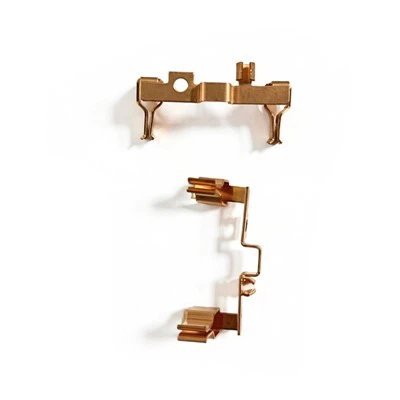
If you’re an appliance manufacturer, electrician, or distributor working on a project and need reliable EU standard plug pins that meet all safety and performance requirements, don’t guess at power limits—work with a supplier that can provide tested, compliant components tailored to your needs. Whether you need pins for a 50W phone charger or a 3,500W space heater, we can deliver the right pins to keep your products safe and compliant. Get in touch to discuss your specific requirements, and let’s make sure your next project powers up without compromise.
Jp Standard Plug Pin References
IEC 60884-1: Plugs and socket-outlets for household and similar purposes – Part 1: General requirements, International Electrotechnical Commission, 2022.
EN 60309-1: Plugs, socket-outlets and couplers for industrial purposes – Part 1: General requirements, European Committee for Electrotechnical Standardization, 2019.
Joule Heating in Electrical Contacts, Institute of Electrical and Electronics Engineers (IEEE), Transactions on Components and Packaging Technologies, 2020.
Dongguan Fangrun Metal Products Co., Ltd.
We’re well-known as one of the leading eu standard plug pin manufacturers in China, specialized in providing high quality customized products. Please feel free to buy discount eu standard plug pin made in China here from our factory. For quotation and free sample, contact us now.
Address: New Town Industrial Zone,Xiegang Village,Xie Gang Town,Dongguan City
E-mail: 825556703@qq.com
WebSite: https://www.fangrunpin.com/
