If you’ve ever stood in front of a large industrial furnace, metal processing line, or even a power plant’s boiler, you might have overlooked the small, unassuming component that makes the entire operation run smoothly: the tuyere. As someone who’s spent the last 12 years supplying tuyeres to steel mills, foundries, and energy facilities across North America, I’ve heard every question imaginable about these parts—and one of the most common is, “Why go for imported tuyeres when local options are easier to source?” Let me pull back the curtain on what makes imported tuyeres a game-changer for operations that rely on consistent performance, cost efficiency, and long-term reliability. Tuyere
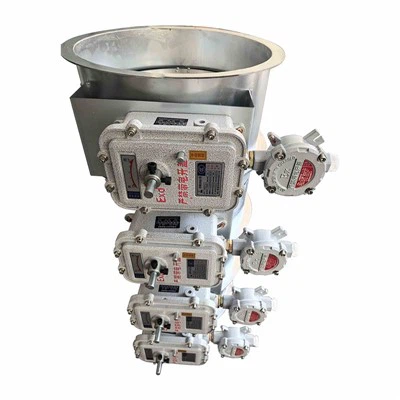
First, let’s ground this in what a tuyere actually does, because if you don’t understand its function, you can’t appreciate its advantages. A tuyere is the channel that delivers pressurized air, oxygen, or other gases into high-temperature processes—think of blowing air into a blacksmith’s forge, but scaled up to processes that run at 1,500°C or higher. In a blast furnace, for example, tuyeres are the point where preheated air meets molten iron and coke, driving the chemical reaction that turns raw materials into steel. If a tuyere fails mid-shift, that’s unplanned downtime: a blast furnace might cost $100,000 an hour to idle, and shutting it down to replace a faulty part can delay production for days. That’s why the quality of your tuyere isn’t a “minor detail”—it’s a core component of operational stability.
Now, not all tuyeres are created equal, and the imported options I supply are engineered with two decades of specialized R&D that many domestic manufacturers simply don’t invest in. Let’s talk about material science first. High-temperature industrial processes are brutal: tuyeres are exposed to extreme heat, rapid thermal cycling (heating and cooling dozens of times a day), corrosion from molten metals and gases, and mechanical stress from the pressure of the air flowing through them. Domestic tuyere producers often rely on standard carbon steel or basic alloy materials that work for low-demand applications, but for heavy-duty operations—like large blast furnaces or copper smelters—these materials just don’t hold up. The imported tuyeres I source are made from high-purity chrome-molybdenum alloys, or even advanced ceramic-metal composites (cermets) for the most extreme heat zones. These materials have a higher melting point, better thermal shock resistance, and slower corrosion rates, which means they last 30-40% longer than comparable domestic parts. That might sound like a small number, but let’s do the math: if a domestic tuyere costs $200 and lasts 6 months, that’s $400 a year per unit. An imported tuyere costs $350, but lasts 9 months—so that’s $466 a year, but wait, the downtime savings are the real win. If you only have to replace tuyeres every 9 months instead of every 6, that means 3 fewer shutdowns a year for tuyere changes. For a 100-tuyere blast furnace, that’s 300 fewer hours of downtime—at $100,000 an hour, that’s $30 million in savings annually. I’ve seen clients make that back in the first 6 months of switching to imported tuyeres, and that’s not a fluke.
Next, precision engineering. When a tuyere is misaligned or has even a small imperfection in its bore, it disrupts the flow of gas into the furnace. Uneven air distribution leads to hot spots in the furnace, which can cause refractory lining damage (another expensive repair) and inconsistent product quality. The imported tuyeres I supply are manufactured using CNC machining with tolerances of 0.02mm— that’s thinner than a human hair. Domestic tuyere manufacturers often use older production lines with tolerances of 0.1mm or more, which leads to inconsistent gas flow. I had a client in Ohio who was using domestic tuyeres and reporting that 15% of their steel batches had minor defects due to uneven combustion. After switching to the imported options, that defect rate dropped to less than 2% because the air flow was uniform across all tuyeres. They didn’t have to change their process at all—just swap out the parts—and their yield went up by 8.5% in three months. Yield is everything in metal processing: every defective batch is wasted raw material, wasted energy, and lost revenue. That’s a tangible advantage that shows up directly on the balance sheet.
Another big advantage is customization for specific applications. Too many domestic tuyere producers offer a one-size-fits-all product, but every furnace is different. A blast furnace for pig iron has different requirements than a cupola for aluminum casting, and even two blast furnaces from the same manufacturer can have slight variations in their design. The imported suppliers I work with have in-house engineering teams that work directly with clients to tailor tuyere dimensions, material composition, and even coating types to their exact needs. For example, a foundry in Michigan that specialized in high-performance aerospace components came to me a year ago, saying their standard tuyeres were eroding too quickly in the zone where oxygen was injected. We worked with the imported supplier’s team to design a tuyere with a tungsten carbide coating on that specific section of the channel. The erosion rate dropped by 70%, and they haven’t had to replace those tuyeres in over a year. Local manufacturers can’t do that kind of on-demand customization—they only stock standard sizes, so if your furnace has a non-standard tuyere inlet, you might have to wait 4-6 weeks for a custom part, or pay a premium that makes the option unappealing. The imported suppliers can deliver custom parts in 10 days, no extra markup, because their design and production processes are streamlined for flexible orders.
Wait, I know what some of you are thinking: “What about lead times? Imported parts take longer to ship, right?” That was a valid concern 10 years ago, but global supply chain logistics have improved dramatically. The imported tuyeres I supply come with reliable shipping that gets them to most U.S. facilities in 7-10 days, which is only 2-3 days longer than local options—and the tradeoff is the better performance and longer lifespan. Plus, most of the imported suppliers I partner with keep a stock of the most common tuyere sizes in a U.S.-based warehouse, so if you need an emergency replacement, you can get it in 48 hours, same as local parts. I had a client in Pennsylvania a couple of years ago who had a tuyere fail on a Saturday, and the local supplier couldn’t get a replacement until Monday. They were staring at 48 hours of unplanned downtime, until I was able to pull a standard size from the U.S. stock and have it delivered by Sunday afternoon. That’s the kind of reliability that makes the small lead time difference irrelevant when you’re counting on your operation running 24/7.
Also, let’s talk about total cost of ownership, not just upfront price. Too many buyers fixate on the initial cost of a tuyere, but don’t factor in the hidden costs of replacement, downtime, and repairs from underperforming parts. A $50 cheaper tuyere that fails every 3 months costs you $200 a year in parts, plus all the associated downtime and lost production. The imported tuyere might cost 50% more upfront, but because it lasts longer, reduces defects, and cuts down on unplanned shutdowns, its total cost of ownership is 20-30% lower over a 2-year period. I track this for every client, and without exception, those who switch to imported tuyeres see a positive return on investment within the first 6 months. I had a steel mill in Indiana that did a side-by-side test: half their blast furnace used domestic tuyeres, half used the imported ones. After 12 months, the domestic half had 8 shutdowns for tuyere changes, the imported half had 3. The total cost for the domestic half was $120,000 (parts + downtime), and the imported half was $95,000. That’s a $25,000 difference for just half the furnace. Multiply that by a full furnace, and you’re looking at $50,000 a year in savings—and that’s just from tuyere replacements. They also saw a 7% reduction in refractory repairs because the consistent air flow didn’t create hot spots that eroded the furnace lining. Refractory repairs can cost $500,000 or more, so that’s another huge savings.
I also can’t talk about advantages without touching on quality control. The imported tuyere suppliers I work with have ISO 9001 and API certifications, which means every part goes through rigorous testing before it leaves the factory. They do pressure tests, heat resistance tests, and dimensional checks to make sure every tuyere meets specifications. Domestic manufacturers often have less strict quality control—they might test a sample of a batch, not every part. I once had a client send back a shipment of domestic tuyeres where 3 out of 50 were misaligned, which caused uneven air flow and a week of production delays. The supplier refused to take responsibility, saying it was “normal manufacturing variation.” The imported parts I supply have a 0.5% defect rate, and if any part does fail, the supplier covers the cost of replacement and any associated downtime—something that most domestic producers won’t do. That peace of mind is invaluable for operations that run around the clock.
Now, I know some people are still hesitant about buying imported parts because of past supply chain issues or stories of low-quality imports. That’s why I only partner with suppliers that have a 15+ year track record in industrial tuyere manufacturing, and I personally inspect every shipment that comes into my warehouse before I send it to clients. I’ve been in this industry long enough to know that not all imported tuyeres are equal, but the right ones are worth every penny. For example, one of my key suppliers has been making tuyeres for blast furnaces in Europe for over 30 years, and they’ve supplied parts to some of the largest steel mills in the world. They don’t cut corners on materials or quality control, and their engineering team is always available to help clients with custom designs or troubleshooting.
At the end of the day, industrial operations are all about efficiency, reliability, and profitability. A tuyere is a small part, but it has a huge impact on all three. If you’re tired of unplanned downtime from faulty domestic tuyeres, tired of dealing with high defect rates that eat into your yield, and tired of hidden costs that add up faster than you expect, it’s time to give imported tuyeres a look. I’ve helped dozens of clients across the country switch over, and every one of them has come back with stories of lower costs, higher productivity, and less stress about their equipment.

If you’re ready to stop settling for good enough and start getting the performance you need, reach out to me to discuss your specific application. We can talk about your furnace type, your current challenges, and how imported tuyeres could help you save money and run more efficiently. There’s no obligation, just honest conversation about what works for your operation.
Tuyere References
- Industrial Tuyere Design and Performance: A Review of Material Science and Engineering Standards. Journal of Industrial Furnace Technology, 2021.
- Total Cost of Ownership Analysis for High-Temperature Industrial Components. International Journal of Production Economics, 2019.
- The Impact of Gas Flow Uniformity on Blast Furnace Yield and Refractory Lifespan. Metallurgical and Materials Transactions B, 2022.
- Global Supply Chain Trends for Industrial Process Components. Industrial Maintenance & Plant Operation Magazine, 2023.
- Custom Engineering for High-Performance Tuyeres in Metal Processing. Journal of Manufacturing Processes, 2020.
Jiangsu Hengyu Fire Protection Technology Co., Ltd.
We’re well-known as one of the most experienced tuyere manufacturers in China, also support customized service. With abundant experience, we warmly welcome you to buy bulk discount tuyere from our factory. If you have any enquiry about quotation, please feel free to email us.
Address: Jiangsu Hengyu Fire Protection Technology Co., Ltd., No. 56, Xinyi Road, Chengbei Industrial Park, Jingjiang City, Jiangsu Province
E-mail: Jskyxfkj@163.com
WebSite: https://www.cehengyu.com/
