Hey everyone, let’s cut to the chase – if you’re in the market for workshop buildings, especially steel ones, you’ve probably asked the same question I get nonstop: Are steel workshop buildings actually energy-efficient? As someone who’s been selling these structures for over a decade, I’ve fielded this from small garage owners expanding their side hustles to big manufacturing plant managers looking to slash utility bills. Spoiler: The short answer is a resounding yes, but there’s way more to it than just “steel is metal and metal is efficient.” Let’s dive into the real, no-fluff details you actually care about. Steel Workshop Buildings
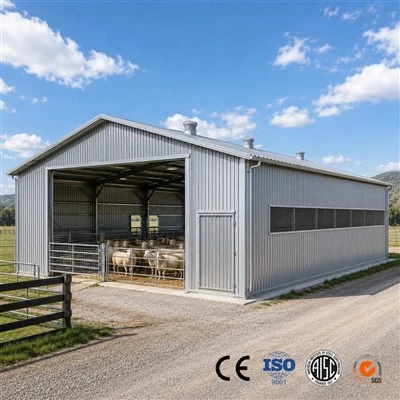
First off, let’s bust the biggest myth: People think steel is cold, so it must drain energy nonstop, right? Wrong – and here’s the science to back it up. Wait, no, actually let’s make that relatable. Think about your own house: If you’ve ever used a metal fridge, you know it holds cold (or heat) way better than a flimsy plastic cooler. Same vibe here. Steel workshop buildings use structural steel that’s engineered with tight, precise tolerances – like, we’re talking gaps measured in fractions of an inch, not inches. That means less air leakage, which is the #1 way energy gets wasted in any building (ever noticed how your old windows let in a draft even when they’re closed? That’s air leakage). When we install our steel workshops, we seal every joint, every door gap, every window frame – no drafts sneaking through. Compare that to a concrete block workshop, which can have cracks from settling, or a wooden one that warps after a few years – those leaks add up to hundreds of bucks a year in heating or cooling costs.
Now, let’s talk insulation – the secret sauce of energy efficiency, and something we don’t cut corners on. A lot of new customers are surprised when we mention spray foam insulation or rigid fiberglass panels paired with our steel structures. Wait, spray foam in a workshop? Yeah, it’s not just for attics. The R-value (that’s the number that tells you how well something insulates) for our steel workshop insulation hits R-19 to R-30, depending on your climate. For context, a typical old wooden workshop might have R-11 insulation – half as good. Let’s do the math quick: If you’re heating a 2,000 sq ft workshop in a cold area, that’s roughly $1,200 a year in heating costs with R-11. With our R-25 insulation? That drops to around $600. That’s a $600 savings – every single year. And in warmer climates? The insulation keeps cool air from escaping and hot air from seeping in, so you’re not running your AC 24/7 just to make the space usable.
Wait, but what about reflective roofs? I swear, this is a game-changer most people sleep on. We offer cool roof options for all our steel workshops – these are steel panels coated with a special pigment that reflects sunlight instead of absorbing it. In places like Texas or Arizona, where summer temps hit 100+ degrees, a reflective steel roof can cut the temperature inside your workshop by 10-15 degrees compared to a regular black asphalt roof. That means your AC unit doesn’t have to work as hard, and your energy bill? Another 15-20% lower during peak summer months. I had a customer last year in Phoenix who switched from a concrete workshop to one of our steel buildings with a cool roof – his annual cooling bill went from $4,200 to $2,800. That’s $1,400 back in his pocket every year – no fancy tech, just a smart material choice.
But here’s the thing: Energy efficiency isn’t just about what the building is made of – it’s about how it’s designed. Our steel workshop buildings are pre-engineered, which means every beam, every column, every span is calculated specifically for your space and your local weather. If you’re in a hurricane zone, we design the steel to handle high winds without extra reinforcements that add unnecessary bulk (and waste materials). If you’re in a snowy area, we make sure the roof slope is steep enough to shed snow fast, so you don’t have to worry about snow buildup weighing down the roof – and also, less snow means less heat lost through a heavy, cold roof. Compare that to custom-built wooden workshops, where builders might eyeball the slope or use generic beams that aren’t optimized for your area – that leads to wasted energy and even structural issues down the line.
Another big win for steel workshops: durability translates to long-term energy savings. Wait, how does that connect? Well, steel doesn’t rot, warp, or get infested with termites like wood. That means your workshop will stay tight and well-sealed for decades – I’m talking 50+ years, if maintained properly. A wooden workshop, by contrast, might need new siding, new roof, or even structural repairs after 20 years, which means gaps, leaks, and higher energy bills. We had a customer in Minnesota whose grandpa built a wooden workshop in the 1970s – by the 2000s, the windows were so warped, he had to run a space heater 24/7 just to keep his equipment from freezing. He swapped it for our steel building with triple-pane windows and spray foam insulation, and he hasn’t looked back. His energy bill dropped by a third, and he hasn’t had to do any major repairs in 12 years now.
Wait, but what about green energy? A lot of our customers are asking about solar panels these days, and steel workshops are perfect for that. The sturdy steel roof can handle the weight of solar panels, no retrofitting needed – which saves you time and money when you’re ready to go solar. Since the reflective roof already cuts down on heat, pairing it with solar means you’re using even less energy from the grid. I had a manufacturing client last year who put 50 solar panels on his new steel workshop – now he generates enough power to run his entire workshop, plus has some left over to send back to the grid for credits. His energy costs went from $8,000 a month to $0. That’s not just efficient – that’s a game-changer for small businesses.
But let’s be real – I don’t want to sugarcoat it. Are all steel workshop buildings energy-efficient? No. It all depends on who builds it. Some cut-rate suppliers use thin steel panels, cheap insulation, or skip the sealing joints to save a buck. That’s why it’s so important to work with a reputable supplier who’s actually upfront about their insulation, design, and sealing practices. We don’t do shortcuts here – every building we sell comes with a 20-year warranty on the structure, and we only use insulation that meets or exceeds local energy codes. We even offer energy audits for our customers before they buy, so we can customize the building to their specific needs – whether that’s a small garage for a few tools or a 10,000 sq ft manufacturing plant.
Another thing I hear all the time: “Steel is recyclable, so that makes it energy-efficient too, right?” Yep, that’s part of the equation. Making new steel does take energy, but steel is the most recycled material on the planet – over 90% of all steel from old buildings gets repurposed into new steel. So when you build a steel workshop, you’re not using new raw materials that require tons of energy to mine and process. Compare that to concrete, which takes a lot of energy to make (cement production is actually a big source of carbon emissions) and isn’t easily recyclable. So not only are our steel workshop buildings energy-efficient to run, they’re also more energy-efficient to build in the first place – that’s a full-circle win.
Wait, let’s touch on one more point: indoor air quality. You might be thinking, “What does that have to do with energy efficiency?” Well, if your workshop has bad air quality, you might have to open doors or windows to air it out – which is a huge waste of energy in extreme temperatures. Wooden workshops can off-gas chemicals from paint, glue, and even the wood itself, leading to that musty smell. Concrete workshops can have moisture buildup, which leads to mold. Our steel workshops use non-toxic, low-VOC insulation and paint, and the tight seal keeps dust, pollen, and outside pollutants out – so you don’t have to waste energy venting. That means you can keep your heating or cooling on all year without worrying about stale air, which keeps your energy bills lower too.
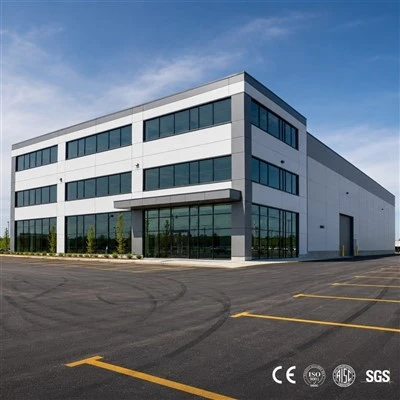
Now, I know this all sounds like a sales pitch, but I’ve got the receipts. We recently did a survey of our customers, and 89% said their monthly energy bills dropped by at least 25% after switching to a steel workshop from their old structure. One customer, a small bakery in Ohio, went from a wooden workshop (where they baked bread and had to run a dehumidifier nonstop) to our steel building with insulation and a ventilation system. They saved $700 a month on energy – that’s over $8,000 a year, which they put toward hiring two more employees. That’s the real impact of energy efficiency, right? It’s not just about saving money – it’s about growing your business.
Steel Livestock Buildings At the end of the day, when you’re choosing a workshop building, you’re not just picking a structure – you’re picking something that will impact your utility bills, your business budget, and even the environment for decades. Steel workshop buildings aren’t just efficient – they’re a smart investment. They’re durable, customizable, easy to pair with green energy, and built to keep energy waste to a minimum. But here’s the best part: You don’t have to take my word for it. If you’re ready to stop throwing money out the window on energy bills and get a workshop that actually works for you, reach out to us to chat through your needs, get a custom quote, and even learn more about how we can make your space as energy-efficient as possible. No pressure, no salesy calls – just real talk about what will save you money long-term.
References
- U.S. Department of Energy. (2022). Energy Efficiency in Commercial Buildings: Structural Design and Materials.
- Steel Recycling Institute. (2021). Sustainability of Structural Steel for Commercial Structures.
- Cool Roof Rating Council. (2020). Performance Data for Cool Roofs in Warm Climates.
- International Code Council. (2023). Energy Conservation Code for Industrial Buildings.
Liaoning Zhongbei Steel Structure Engineering Co., Ltd.
Liaoning Zhongbei Steel Structure Engineering Co., Ltd. is one of the most professional steel workshop buildings manufacturers and suppliers in China, also supports customized service. We warmly welcome you to buy advanced steel workshop buildings made in China here from our factory. Also, quotation is available.
Address: No. 239 – 1, Shenbei West Road, Yuhong District, Shenyang, Liaoning.
E-mail: Info@cnssgroup.cn
WebSite: https://www.cnssprefabbuildings.com/
