If you’ve ever walked through a garden and noticed that one type of aphid is the only insect swarming a rose bush, or watched a small, specific moth pin itself to a light near your garage at 2 a.m., you’ve seen how nature relies on chemical signals to guide tiny creatures’ biggest choices. For the last eight years, I’ve spent most of my days working with pheromone lures—first in a small lab testing these chemicals on fruit orchards, and now as a supplier of these small, unassuming products to farmers, pest control specialists, and home gardeners across North America. I still get questions every week from people who hear “pheromone lures” and think it’s some kind of voodoo trick to make pests disappear. Today, I want to break down exactly how these lures work, why they’re not just a fad, and what makes the ones we provide different from the cheaper versions you might find online. Pheromone Lures

Let’s start with the basics: what even is a pheromone? For the uninitiated, a pheromone is a chemical signal an organism releases to communicate with others of the same species. Think of it as a species-specific text message—you can’t send a text from an iPhone to an Android and have it make sense, and a dog can’t detect a bee’s pheromones, just like a human can’t (with a few very limited exceptions) pick up on the pheromones most insects use. Insects, especially the ones we target with our lures, evolved these signals over millions of years to do one main thing: find a mate. That’s right—most pest species that cause problems for crops or homes don’t waste their pheromones on anything else. Female moths, for example, spend their first few hours as adults pumping out a tiny, almost undetectable amount of a specific chemical that tells males within a 1-mile radius, “I’m here, ready to mate, don’t let another female beat you here.”
That’s where our lures come in. A pheromone lure is not a poison, it’s not a trap that zaps bugs, and it’s not some kind of synthetic perfume. It’s a carefully calibrated container that holds the exact same chemical compound (or, in some cases, a mix of a few compounds) that the target pest uses to call for mates. When we make a lure, we don’t just mix some chemicals in a bottle and call it a day—we have to replicate that natural pheromone with perfect precision, because even a tiny difference in chemical structure will make it undetectable to the insect. For example, the codling moth, which ruins 90% of unsprayed apple and pear crops, uses a pheromone called codlemone. If we make a lure with codlemone that’s just 1% less pure than the natural version, male codling moths won’t land near it—they’ll think it’s a fake signal from a rival female, or just not pick it up at all. We test every single batch of our lures against the natural pheromone, usually by sending samples to a local university entomology lab, to make sure the purity is within 0.5% of the natural chemical. That’s the detail that separates a lure that works and one that’s just a waste of money.
Once we have that pure chemical, we need to release it at the exact same rate that a female would. Here’s another part most people don’t get: if a female moth releases pheromones 24 hours a day, a lure that releases the chemical all at once in one big puff will either attract males for only an hour or two, or the chemical will break down in the sun too fast and stop working in a day. Our lures use a slow-release matrix—usually a small rubber cap or a polyethylene tube—that we load with the pheromone. The chemical seeps out of the matrix at a constant, slow rate, for 4 to 12 weeks, depending on the pest. For smaller pests, like the Oriental fruit moth that attacks peaches and plums, we use a smaller matrix that releases a tiny amount of pheromone for 4 weeks, because these moths only mate in short bursts during the warm part of the growing season. For larger, longer-season pests like the European corn borer, we use a slightly larger matrix that releases pheromone steadily for 10 weeks, enough to cover the entire mating window of that pest.
Now, how does this actually control pests? There are two main ways pheromone lures work in the field, and we design our lures for each purpose. The first is monitoring. A lot of small farmers or pest control companies use lures just to track how many of a specific pest are in their area. For example, if you’re a small apple grower, you might hang a sticky trap with a codling moth lure every week in your orchard. When you count how many male moths are caught, you can tell when the mating season starts, how many moths are present, and when you need to take action to prevent larvae from eating your apples. This is way more accurate than just guessing when pests will show up—by the time you see a worm in an apple, it’s already too late to stop that generation, but a lure will tell you 2 or 3 weeks before that happens. That’s a game-changer for small farms, because it lets you only apply pest control when you actually need to, not on a rigid schedule.
The second, and often more impactful, way lures work is through mating disruption. This is the part that blows a lot of people’s minds. Instead of just tracking pests, you saturate an entire field or orchard with pheromone lures. Imagine that natural pheromone signal: a male moth can follow that signal to a female, even if there are trees and wind getting in the way. If you release thousands of times more pheromone than natural females would, the males can’t pick up on the individual female’s signal anymore. Their little antennae, which are tuned to that specific pheromone, are flooded with so much of the chemical that they can’t distinguish one signal from another. So they fly around in circles, never find a female, and don’t mate. No mating means no eggs, no larvae, no damage to crops. I’ve seen this work firsthand on a 50-acre peach orchard in southern Michigan—two years ago, the grower was spraying insecticides every 10 days to stop Oriental fruit moths, which had cut his peach yield by 40%. We worked with him to hang 500 of our Oriental fruit moth lures across the orchard, and by the third month, he was catching almost zero male moths. That year, his yield only dropped 5%—and he saved over $12,000 in insecticide costs. That’s the real power of these lures: they turn a pest control problem into a behavioral problem for the insect, not a toxic one for the environment.
But here’s the thing—pheromone lures only work if you use them right. I’ve had customers come to us frustrated, saying “your lure didn’t work,” and when I ask what they did, I find they made a common mistake. First, timing is everything. You can’t hang a codling moth lure in mid-July and expect it to work, because codling moths emerge in early spring, right when apple trees start blooming. If you hang the lure too late, the first generation of moths has already mated, and your orchard will have worms before the lure even starts releasing pheromone. We give every customer a detailed guide that tells them exactly when to hang each lure, based on their region and the pest they’re targeting, and we always recommend checking with a local extension office to confirm the timing. Second, placement matters. A lure hung 10 feet high in an orchard will work better than one hung at ground level, because most male moths fly in the upper part of the tree canopy. A lure hung on the north side of a tree will work less well than one hung on the south side, because wind patterns will carry the pheromone further and more evenly. I always tell new customers: spend 10 minutes placing a lure correctly, and it will work 10 times better than hanging it somewhere random.
Another common mistake people make is buying cheap lures from overseas. We’ve tested a lot of those—some of them have barely any pheromone in them, some of them use the wrong chemical structure, and some break down in the sun in just a few days. Last year, a small vegetable farmer from Ohio bought a bulk pack of imported corn borer lures, hung them in his 10-acre corn field, and caught almost no moths. When we tested his lures in our lab, we found they had less than 10% of the pheromone they claimed to have, and what little was there was the wrong isomer—basically, the chemical mirror image of what the corn borer can detect. He’d wasted $800 on lures and had to spray his entire corn field, which cost him an extra $2,500. That’s why we only source our pheromones from a US-based lab that specializes in insect chemical research, and we test every single batch ourselves before we ship them. We don’t cut corners on purity or release rate, because we’ve seen what happens when you do.
Now, you might be wondering: are these lures safe? For humans, for bees, for birds, for pets? The short answer is yes. Pheromones are species-specific, so the pheromone that attracts codling moths doesn’t affect honeybees, which have their own set of pheromones for communication. The chemical we use in our lures is the same one found in nature—we’re just concentrating it so insects can detect it easily. It doesn’t leave toxic residues on crops, it doesn’t harm beneficial insects like pollinators, and it’s biodegradable. I’ve worked with beekeepers who use our lures to monitor wax moths, which damage beehives, and they say the lures haven’t had any impact on their honey production or hive health. Compare that to traditional insecticides, which kill every insect they touch, including the ones that eat pests and pollinate crops, and it’s easy to see why more farmers are switching to pheromone-based pest control.
We also make lures for home gardeners, not just large farms. A lot of people don’t know that you can use pheromone lures in your backyard garden or vegetable plot. We have small, affordable lures for plum curculios, squash bugs, and Japanese beetles—all common pests that ruin home gardens. I hang a Japanese beetle lure in my own backyard every June, and I catch dozens of male beetles every week, which means fewer females to mate and lay eggs that will become grubs in my lawn. It’s not a silver bullet, but when paired with a few other organic practices, it keeps my garden producing tomatoes and peppers without any harsh sprays.
At the end of the day, pheromone lures are just another tool—they don’t work for every pest, and they don’t solve every pest problem. But for the pests they are designed for, they work better than most people expect, and they’re way better for the environment than insecticides. For me, that’s why I’ve spent the last 8 years in this business: not because I want to sell lures, but because I want to help people protect their crops and gardens without hurting the planet.
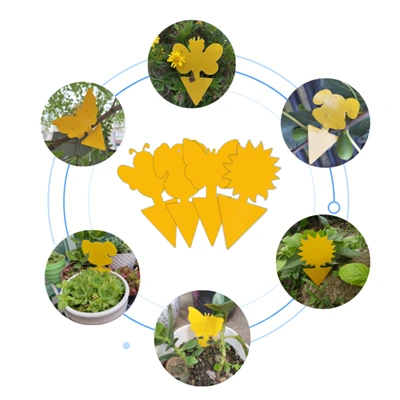
If you’re a farmer, pest control professional, or even a home gardener who’s tired of dealing with pest damage and harsh chemicals, I’d love to talk to you about our pheromone lures. We can help you figure out which lures you need, when to hang them, and how to use them effectively for your specific space. Whether you have a 1-acre garden or a 100-acre orchard, we can work with you to find a solution that fits your needs. Don’t hesitate to reach out to discuss your requirements and find the right pheromone lures for you.
Agricultural Monitoring System References
Landolt, P. J., & Phillips, T. W. (1997). Host plant influences on sex pheromone behavior of phytophagous insects. Annual Review of Entomology.
Witzgall, P., Kirsch, P., & Cork, A. (2010). Sex pheromones and their impact on pest management. Journal of Chemical Ecology.
American Farm Bureau Federation. (2022). Trends in sustainable pest management for small and mid-sized farms.
University of California Statewide IPM Program. (2021). Pheromone-based monitoring and mating disruption for orchard pests.
Sichuan Ruijinte Technology Co., Ltd.
As one of the most professional pheromone lures manufacturers in China, we have world-leading production equipment and strong manufacturing capabilities. Please rest assured to wholesale high quality pheromone lures at competitive price from our factory. Customized orders are welcome.
Address: No. 616, 6th Floor, Building 1, No. 8, Tianjiu North Lane, High-tech Zone, Chengdu
E-mail: glock@rjt-agri.com
WebSite: https://www.rjtagri.com/
