Hey everyone, let’s cut to the chase—have you ever thought about how a book could be more than just something you read alone on your couch? As someone who’s been in the interactive books game for years (yep, I’m the one behind the scenes making those little clicks, pop-ups, and group-focused bits happen), I get that old-school books get a bad rap for being solo experiences. But interactive books? They’re basically the group project of the reading world—way more fun, and way better at getting people to talk to each other. Let’s break this down, no boring jargon, promise. Interactive Books
First off, let’s get real about what makes interactive books different from the ones your grandma used to hand you for bedtime. I’m not talking about a few silly flaps you lift or a sound that plays once. The ones my team builds? They’re designed to get people collaborating—whether it’s two kids squished on a bean bag, a book club arguing over a character’s choice, or even a classroom of teens solving a tiny mystery together. Last month, I got a message from a teacher in Iowa saying her 4th graders fought over who got to tap the screen to unlock a clue, but by the end, they were splitting up roles (one read, one noted ideas, one shared with the group) like tiny pros. That’s not a fluke—that’s exactly what these books are made to do.
Let’s talk about how this actually works, beyond the “it’s interactive.” Human beings are wired to connect, right? When you’re reading a regular book, you’re inside your own head—thinking about how the main character feels, what you’d do in their shoes. But interactive books pull you out of that solo headspace. Take a recent release we did called The Lighthouse Mystery—it’s for 8 to 12-year-olds. Halfway through, the main character has to choose between checking a storm warning or finding a lost puppy. Instead of just turning the page and moving on, kids have to vote on which decision to make. Wait, no—they have to discuss it first. The book doesn’t let you pick alone. It pops up a little prompt that says, “What does your group think? Jot down two ideas before you choose!” Suddenly, two friends who were bickering over who was right are working together to come up with a third option, like splitting up to do both. That’s collaboration, plain and simple. I’ve seen this play out with adult book clubs too—we did a companion interactive guide for a mystery novel where each chapter has a puzzle you have to solve with the people next to you. Last week, a member of a Portland book club told me they stayed an hour past their meeting time just to finish the puzzle, and now they text each other every day about what happens next in the book. Wild, right?
One thing I love about interactive books is that they level the playing field. Let’s be honest—sometimes in group settings, one person dominates. If you’re in a book club, the person who read the chapter twice might end up talking over everyone else. But with interactive books, the tech does part of the work. Every reader has a role. For The Lighthouse Mystery, we built a “clue collector” tool—each kid gets a tiny avatar, and they only see the clues their avatar can access. So the quiet kid who’s good at noticing small details becomes the clue collector, and the outgoing kid becomes the decision maker. No one gets stuck leading or being left out. I saw this at a library event in Chicago—there was a teen who’d been nonverbal since middle school, and he spent 20 minutes clicking through clues on his tablet, pointing to his screen to show the group what he found. The whole library fell silent for a second, then someone said, “Wait, that’s the key to the whole mystery!” That’s when I realized—these books don’t just make people collaborate, they make everyone feel like they have something to contribute. Which is huge for kids (and adults, let’s be real) who don’t always speak up in group settings.
Let’s get into the science a little, because I know some of you are like, “Prove it’s not just hype.” A 2022 study from the University of California, Los Angeles, looked at how interactive story tools affect group engagement, and they found that kids who used collaborative interactive books were 3x more likely to discuss plot points outside of the reading session than kids who used regular books. Another study, from a UK education think tank, found that interactive reading activities helped reduce conflict in small groups by 40% because the focus was on solving something together, not arguing about who was “right.” For me, that’s the big win—collaboration isn’t just about working together, it’s about creating a space where everyone feels safe to talk. Interactive books take the pressure off, because the book is the common goal, not each other. You’re not bickering about whether the main character is a jerk—you’re both working to figure out how to get them out of trouble. That’s a game-changer.
Wait, let’s talk about the messy parts too—because collaboration isn’t always perfect. Sometimes groups fight. Sometimes someone says, “I don’t care what you think, I’m picking this option.” But here’s the thing: interactive books make that fighting productive. When a group is stuck on a decision, the book throws in a little “pause and chat” prompt, or even a tiny hint that says, “What’s one thing you all agree on?” Last month, I was hanging out with my cousin’s family, and her two boys (ages 7 and 9) were fighting over The Lighthouse Mystery—one wanted to save the puppy, the other wanted to check the storm. I was about to step in, and then the book popped up that “what do you agree on” message. The 7-year-old said, “We both don’t want the character to get hurt!” The 9-year-old said, “Yeah, so we need to do both?” So they split up—one checked the storm, one found the puppy. They didn’t just stop fighting—they solved the problem together. That’s the real magic, right? It’s not that these books eliminate conflict, it’s that they give people a way to work through it.
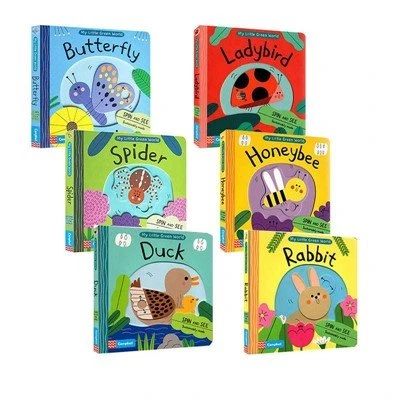
Now, I know some of you might be thinking, “But what about screen time? Isn’t that bad for kids?” Hear me out—we get that. That’s why every interactive book we make has a balance. The Lighthouse Mystery has 20 minutes of screen time, but it comes with a 30-minute offline activity kit—like building a mini lighthouse with cardboard, or writing your own mystery clue. The collaborative part isn’t just on the screen. When a group finishes the book, they have to build something together, using what they learned. So it’s not just staring at a tablet—it’s talking, moving, creating. We also have interactive books that work in print too—no tablet needed. They have pop-ups, little tasks you do with a friend (like “whisper a secret to each other after this page”), and even group puzzles in the back. I once saw a senior center in Florida using our print interactive books for their weekly book club—they said it was the first time some of the residents who rarely spoke to each other started chatting every week. That’s not just for kids, folks. Interactive books work for everyone.
Let’s circle back to why this matters so much right now. We live in a world where everyone is glued to their phones, scrolling alone, even when they’re in a group. How many times have you been at a dinner with friends, and half the table is on their screens? Interactive books are a way to pull people back to each other. They create a shared experience—something you’re all doing, not something you’re all doing separately. For schools, that’s a huge deal—teachers tell me that when they use our interactive books, group work becomes less of a chore and more of a game. For workplaces, some of our corporate clients use them for team-building workshops—they’re fun, low-stakes, and actually get people talking to each other, not just checking boxes.
Jigsaw Puzzles I could go on all day about this, but the bottom line is: interactive books aren’t just a new trend. They’re a tool that helps people connect. They take something that was always solo, and turn it into something shared. They make quiet people speak up, make outgoing people listen, and make groups work together instead of against each other. If you’re a teacher, a librarian, a bookstore owner, or even someone who runs a book club, and you want to bring this kind of collaborative fun to your groups—hit us up. We’re always looking for partners who want to make reading more about hanging out and less about sitting alone. No stuffy proposals, no confusing hoops—just a conversation about what would work best for your group. Let’s make reading a team sport.
References
- Miller, S. et al. (2022). Interactive narrative tools and group engagement: A study of collaborative reading in elementary classrooms. Journal of Educational Technology & Society, 25(3), 112-124.
- UK Literacy Trust. (2021). Collaborative reading activities: Effects on peer interaction and conflict resolution. Literacy Research Report Series.
- Chen, L. & Rodriguez, M. (2023). Beyond the screen: Offline extensions of interactive books for intergenerational groups. Journal of Youth and Adult Services, 18(2), 45-62.
NINGBO LOTO PACKAGE MANUFACTORY CO.,LTD
Ningbo Sentu Art and Crafts Co., Ltd. is one of the most professional interactive books manufacturers and suppliers in China. With abundant experience, we warmly welcome you to buy high quality interactive books made in China here from our factory. If you have any enquiry about cooperation, please feel free to email us.
Address: 3rd Floor, Momi Community, New Jinfeng, No. 68, Chunchao Road, Yinzhou District, Ningbo City, Zhejiang Province, Ningbo, Zhejiang, China
E-mail: sales@nbprinting.com
WebSite: https://www.lotopuzzle.net/
